
The short answer: before the first freeze reaches your Cherokee or Cobb County address, disconnect hoses, protect outdoor faucets and exposed irrigation parts, identify vulnerable pipes, confirm the heat is working, and make sure everyone who may check the property knows where the main water shutoff is. A few targeted steps now can reduce the chance that a cold night turns into a leak, damaged landscaping equipment, or a delayed home sale.
North Georgia does not follow one perfect winter calendar. The National Weather Service’s first-freeze data shows that average timing varies across the region, and an individual year’s first freeze can arrive well before or after the average. That makes your address-level forecast more useful than a date circled on the calendar.
Use this nine-step checklist to winterize your North Georgia home without treating every house or plumbing system the same.
1. Watch the forecast for your actual address
A forecast for Atlanta, Canton, Marietta, or another nearby reporting point may not match the low temperature at your house. Elevation, tree cover, slope, and surrounding development can all contribute to small local differences. Check the National Weather Service forecast for the property address and pay attention to frost advisories, freeze watches, and freeze warnings.
The Weather Service defines a freeze watch as a 50% or greater chance of temperatures at or below 32 degrees during the growing season. A freeze warning is issued when the chance reaches 80%, generally within 24 hours. Treat those alerts as a prompt to finish the outdoor steps, not as the first time to look for a shutoff valve.
2. Find the main water shutoff before you need it
Locate the home’s main water shutoff, confirm that it is accessible, and make sure the appropriate household members or property caretakers know where it is. Do not force a corroded or unfamiliar valve. If you are uncertain which valve controls the home, ask a qualified plumber or the appropriate water provider.
Then trace the areas most likely to be exposed to cold: pipes along exterior walls, plumbing in an unheated garage, crawlspace or attic lines, outdoor kitchens, detached buildings, well equipment, and supply lines near foundation openings. The goal is not to turn the house into a plumbing diagram. It is to know which areas deserve attention first.
3. Disconnect, drain, and store garden hoses
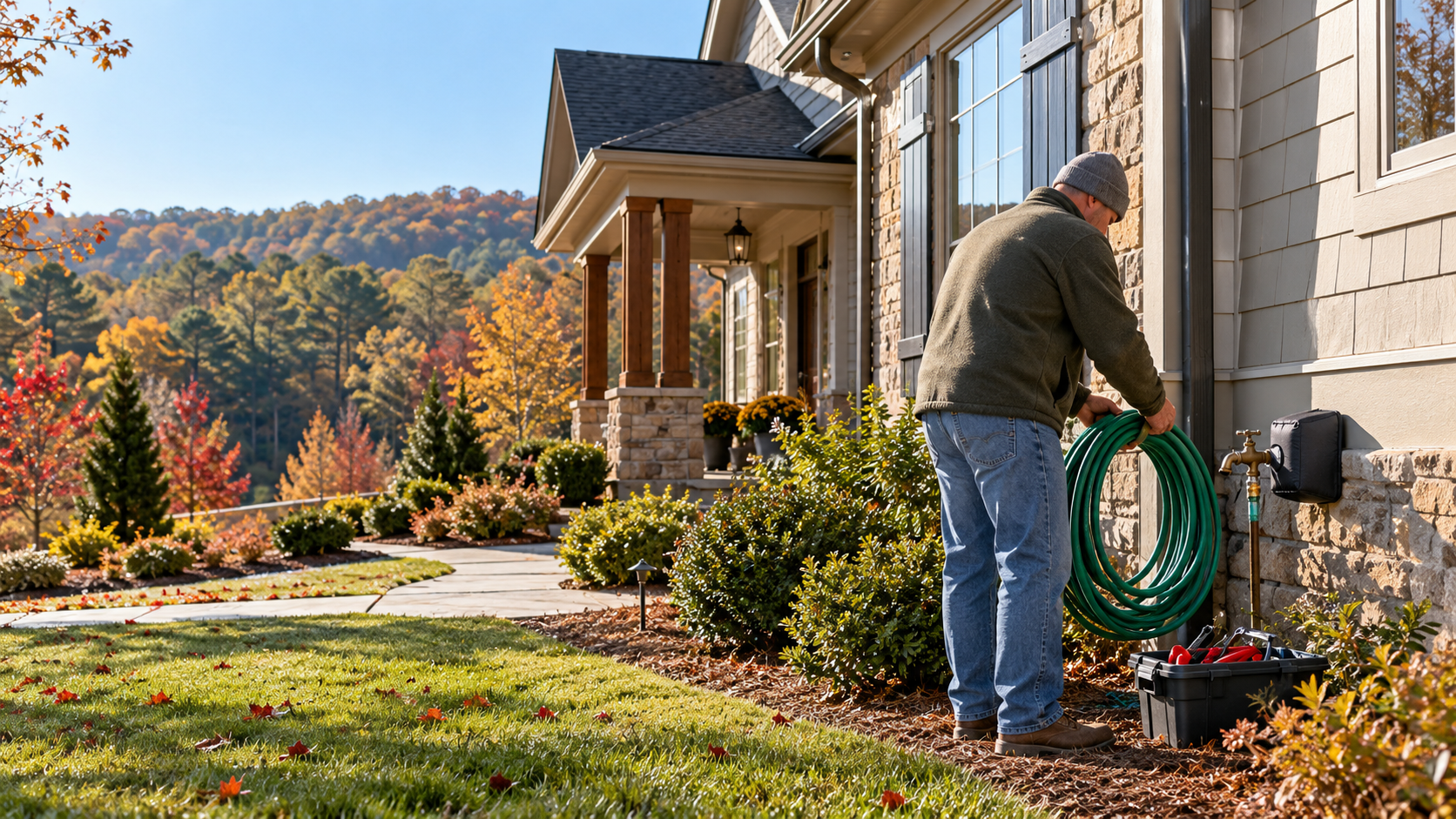
A hose left attached can hold water against the outdoor faucet and connecting pipe. Disconnect every hose, drain it, and store it where it will not be damaged. If the faucet has an interior shutoff, follow the manufacturer’s or a plumber’s directions for shutting off and draining that branch. Add an insulated faucet cover when appropriate for the fixture.
This is one of the simplest items on the University of Georgia Cooperative Extension home-maintenance checklist. It is also easy to overlook on side yards, rear decks, and detached garages.
4. Protect irrigation components above ground
Buried irrigation lines are only part of the system. Backflow preventers, valves, filters, sprinkler heads, pumps, and exposed sections can retain water where they are more vulnerable. UGA Extension recommends draining water from system components as part of winterization. The correct procedure depends on the design, so use the installer’s instructions or an irrigation professional when you do not know the system.
Do not improvise with compressed air unless the equipment instructions and your experience support it. Excess pressure can damage parts or create a safety hazard. Photograph the controller settings and labeled valves before changes so spring startup is easier.
5. Check crawlspaces, garages, basements, and well equipment
Insulate exposed water lines in unconditioned areas with materials suited to the pipe and location. Close obvious foundation openings that allow cold air to blow directly across plumbing, while preserving any ventilation or combustion-air requirements for the home. Keep garage doors closed when supply lines run through the garage.
Homes with wells need a system-specific review. Exposed pump, pressure-switch, filter, or treatment components may require protection that a public-water home does not. Identify the equipment and its power source before cold weather, and use a well professional when the proper winterization method is unclear.
6. Test the heat and plan for a cold night
Run the heating system before the first urgent service call is necessary. Replace or clean filters as the manufacturer recommends, confirm vents are open, and schedule qualified service when the system is not heating normally. Test smoke and carbon monoxide alarms according to the manufacturer’s instructions.
During an actual hard cold spell, cabinet doors below sinks on exterior walls may need to be opened so warm air can circulate around the pipes. Move cleaners and other hazards out of reach first. A slow drip may be appropriate for a particularly vulnerable pipe, but it is not a substitute for insulation or repair, and households with septic systems should consider the added water load. Follow local utility or plumbing advice for the specific home.
7. Seal drafts and clear roof drainage
Weatherstripping and caulk can improve comfort around doors and windows, but freeze preparation should also include water management. Clear leaves from gutters, downspout outlets, basement stair drains, and exterior drainage paths where it is safe to do so. Water that cannot move away from the structure can create problems during freeze-thaw cycles.
If leaves are part of the cleanup, review our guide to leaf and yard-debris burning rules in Cherokee and Cobb County before choosing a disposal method. Rules and burn conditions can change.
8. Give vacant and listed homes a written cold-weather plan
An empty property needs more than a thermostat setting. Decide who will check the home after a freeze, power interruption, or utility alert. Confirm the heat, water, irrigation, security, and monitoring arrangements with the home’s insurer and appropriate service professionals. Requirements vary by policy and property.
If the home is already on the market, keep the plan compatible with showings. Maintain safe walkways and comfortable interior conditions, and give the listing team a clear contact process for urgent property issues. Our vacant-home selling checklist covers utilities, insurance, access, and routine property checks in more detail.
9. Keep a simple record of seasonal work
Save invoices for heating service, irrigation winterization, plumbing repairs, and other material work. Photograph the irrigation controller, shutoff location, exterior faucet covers, and any repaired damage. These records can help the household reverse seasonal settings in spring and answer practical questions if the home is listed later.
Maintenance records do not prove that a system is defect-free, and sellers should not overstate what was done. They do make it easier to explain recent work accurately and direct a buyer or inspector to the right area.
If a pipe appears frozen
A faucet that produces only a trickle can indicate a frozen section. Check for visible leaks and know how to stop the water if a split pipe begins leaking. The American Red Cross frozen-pipe guidance says never to use an open flame to thaw a pipe. If the frozen area is inaccessible, cannot be located, or will not thaw safely, call a licensed plumber.
How freeze preparation fits a future home sale
Winterizing is primarily about protecting the home, not staging it. But a dry, heated, well-maintained property is also easier to photograph, show, inspect, and move through a closing. If you expect to sell this winter or early next year, use the first-freeze checklist to separate urgent protection from optional cosmetic work.
Carol can help you build a property-specific pre-listing plan around timing, condition, documentation, and the next move. Schedule a West Legacy Realty consultation before you spend heavily on work that may not support your sale strategy.
This article provides general real estate and home-maintenance information, not plumbing, HVAC, insurance, legal, or safety advice. Weather, property systems, association rules, utility guidance, and insurance requirements vary. Use qualified professionals and current local guidance for your home.