The short answer: as of October 2026, limited burning of hand-piled leaves and natural yard debris may be allowed in parts of Cherokee and Cobb counties after Georgia’s May 1-September 30 summer burn ban ends. That does not make every yard, every day, or every pile legal to burn. The property’s city or unincorporated jurisdiction, temporary fire restrictions, weather, material, pile size, setbacks, supervision, and smoke impact all matter.
If you are asking, “Can you burn leaves in Cherokee County, GA?” or the same question about Cobb County, start by identifying exactly who governs the address. Then check the current fire authority’s guidance on the day you plan to burn. A seasonal date is only the first gate.
This guide summarizes the homeowner rules that are most useful for fall cleanup and pre-listing planning. It is general information, not legal or fire-safety advice. Official restrictions can change quickly when drought, wind, air quality, or local conditions raise the risk.
1. Confirm the Property’s Jurisdiction
County names are not enough because incorporated cities may use their own outdoor-burning ordinances.
Cherokee County Fire & Emergency Services announced on September 30, 2026, that the statewide summer burn ban had ended. Its no-state-permit guidance for hand-piled natural yard debris applies to unincorporated Cherokee County and the cities of Nelson and Waleska. The department specifically directs residents of Ball Ground, Holly Springs, Canton, and Woodstock to follow their city’s ordinance.
Cobb County Fire’s outdoor-burning page says its department enforces the state seasonal ban in unincorporated Cobb County and in Acworth, Kennesaw, Mableton, and Powder Springs. If the address is in another city, verify the applicable city rules rather than assuming the county page controls.
For a home sale, rental turnover, or inherited property, confirm the jurisdiction from the property address before scheduling yard work. An old mailing address, ZIP code, or neighborhood name may not answer that question.
2. Check the Current Status, Not Just the Calendar
Georgia’s Environmental Protection Division lists the annual summer burn ban as May 1 through September 30 for Cherokee, Cobb, and other affected counties. Outside that window, state rules recognize limited burning of leaf piles, yard debris, or hand-piled natural vegetation on the premises.
Local fire officials can still suspend burning when drought, wind, smoke, or other conditions make it hazardous. Cherokee County imposed a temporary countywide restriction during severe drought in April 2026, illustrating why last year’s rule or a saved social post is not enough. Check the current county or city fire page and the Georgia Forestry Commission restrictions map before lighting anything.
If official sources conflict or the status is unclear, pause and call the local fire marshal. Cleanup can be rescheduled; an escaped fire cannot.
3. Burn Only Allowed Natural Material From That Property
The state exception concerns leaves, yard debris, and hand-piled natural vegetation generated on the premises. Cherokee and Cobb guidance both prohibit bringing yard debris from another property to burn.
Do not mix the pile with household garbage or man-made material. Georgia EPD says tires, shingles, plastics, lumber, and household garbage may not be burned, even in a burn barrel. Local guidance also excludes items such as painted or pressure-treated wood, plywood, furniture, mattresses, boxes, paper, stumps, root balls, and other prohibited waste. Burning in a barrel is prohibited under the cited Cherokee and Cobb guidance.
Before a listing photo day or open house, separate the cleanup stream into natural debris, recyclables, reusable material, and approved disposal. That is faster than discovering a mixed pile cannot be burned or collected.
4. Measure the Fire Area Before You Build the Pile
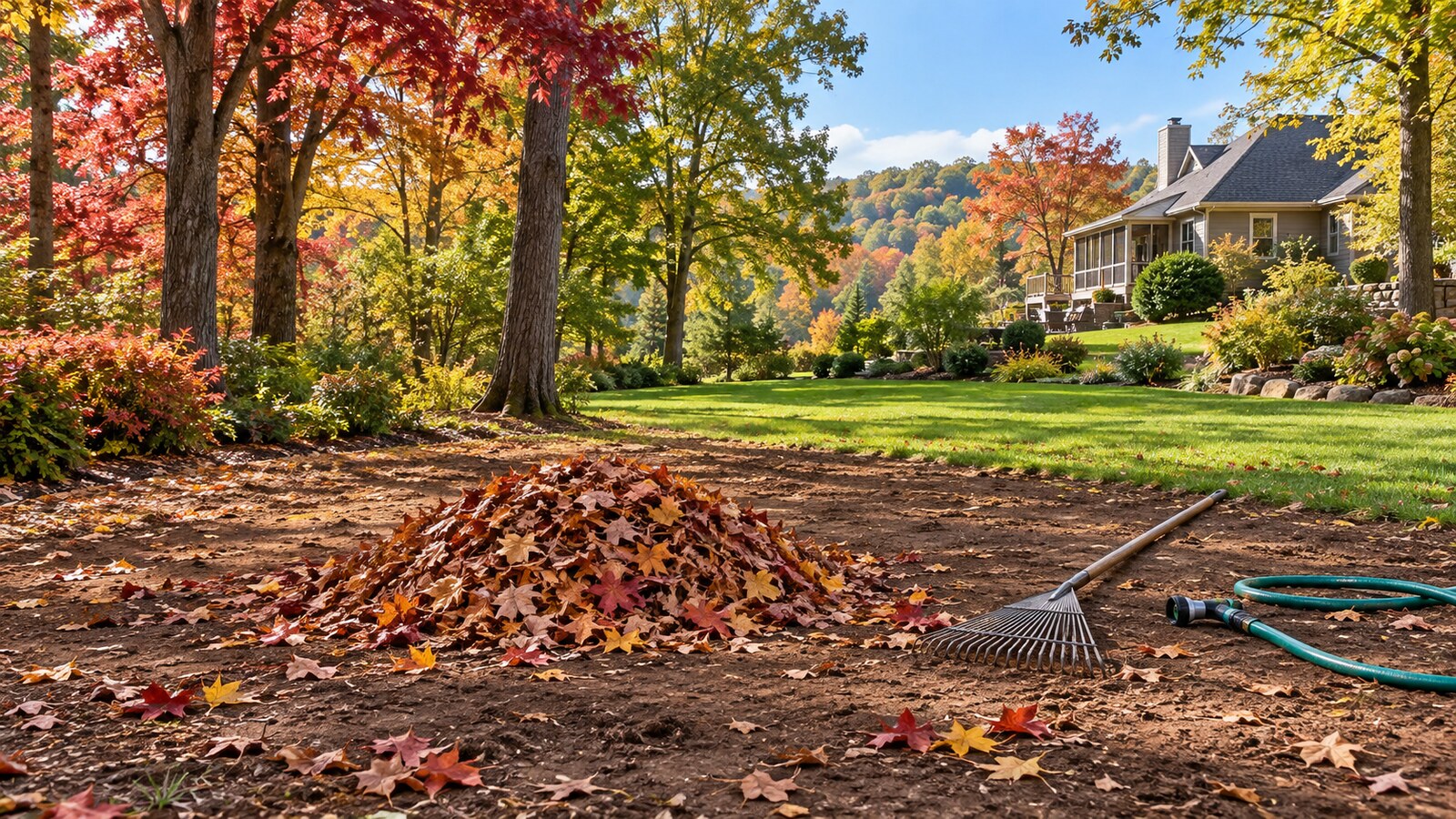
Do not estimate setbacks by eye. The current Cherokee outdoor-burning guide uses the Georgia Forestry Commission’s SSTAR framework: at least 25 feet from woodlands and at least 50 feet from structures. The fire must be attended until fully extinguished, with reasonable precautions ready to prevent escape.
Cobb County’s current page says a small yard-waste fire must be at least 50 feet from structures, including combustible fences, and at least 25 feet from roads with speed limits above 35 mph. A small pile may be no larger than 6 feet by 6 feet, with limbs no larger than 6 inches in diameter. A larger yard-waste fire requires a permit and substantially greater separation.
Those measurements can rule out burning on a compact lot before weather even enters the decision. Also check property lines, easements, overhead conditions, fencing, sheds, decks, wooded edges, and neighboring structures. If drainage or landscaping work is involved, review our guide to landscaping near a drainage easement before placing debris or equipment in an area that must remain open.
5. Respect the Local Time and Weather Limits
Cherokee County’s outdoor-burning information says burning is allowed from 10 a.m. until one hour before sunset. Cobb County uses the same window for yard-waste fires and requires the fire to be completely extinguished one hour before sunset.
Both counties warn against burning on windy days. Their published guidance uses 10 mph as the cutoff and also warns against cloudy, overcast, or rainy conditions that can keep smoke close to the ground. Watch for National Weather Service red-flag warnings, high fire danger, low humidity, and any local restriction.
“It is not raining” is not a complete weather check. Wind at the pile, wind near the tree canopy, and the direction smoke will travel all deserve attention.
6. Stay With the Fire and Keep Extinguishing Tools Ready
An adult should continuously attend the fire. Cherokee’s guide calls for a charged hose with the nozzle within 25 feet of the fire, and Cobb requires a hose long enough to reach it. A rake, shovel, garden hoe, bare-soil break, or other containment tool can support the required precautions.
Do not start the fire with petroleum-based products. Stop adding material early enough to soak, stir, and recheck the pile. “No visible flame” is not the same as completely cold: local rules require no smoldering material or hot coals to remain.
This is not a task to leave running while showing a home, meeting a contractor, or driving away for supplies. Sellers who have already moved should use a broader vacant-home maintenance and monitoring plan instead of treating the property like an unattended cleanup site.
7. Treat Smoke as a Property and Health Issue
A fire that meets pile and distance rules may still have to be extinguished if smoke unreasonably interferes with another person’s property use or affects someone with a health condition. Cobb County also identifies medical burn-ban areas and allows officials to prohibit burning when local conditions make it unsafe.
Before burning, look beyond the lot line. Nearby homes, open windows, outdoor workers, pets, roads, and the forecast wind direction all matter. For sellers, smoke odor and residue can also work against the clean, neutral presentation you want for photographs and showings.
8. Compare Alternatives Before You Burn
Georgia EPD recommends composting, mulching, chipping, natural decomposition, and approved yard-trimming facilities as alternatives. A mulching mower may handle a light layer of leaves. Branches can sometimes be chipped for paths or beds. Municipal or private collection may be the better fit when the lot cannot meet the fire setbacks.
Use current instructions from the city, county, hauler, HOA, or disposal facility. Pickup schedules, container rules, accepted materials, fees, and resident eligibility vary by address and can change.
For a seasonal ownership checklist that goes beyond leaf disposal, see our Cherokee and Cobb fall home-maintenance guide.
Quick Outdoor-Burning Checklist
- Identify the city or unincorporated jurisdiction for the exact address.
- Check today’s county or city fire guidance and current state restrictions.
- Confirm the material is permitted natural debris generated on that property.
- Measure the pile, structures, wooded areas, roads, fences, and property lines.
- Check wind, humidity, red-flag warnings, and smoke direction.
- Keep a charged hose and hand tools ready.
- Attend the fire continuously and extinguish it completely before the deadline.
- Choose mulching, composting, chipping, or approved collection when burning is not a good fit.
Frequently Asked Questions
Do I need a permit to burn a small leaf pile?
Georgia no longer requires a state permit for qualifying hand-piled leaves and natural yard debris burned on the premises, but local rules still apply. Cobb says a qualifying small yard-waste fire does not require a permit while a larger one does. Cherokee’s September 30, 2026, notice says no permit is required for resident hand-piled natural yard debris in the jurisdictions covered by that notice. Always verify the current rule for the exact city or unincorporated address.
Can I burn leaves in a barrel?
No. The cited Cherokee and Cobb guidance prohibits burning in a barrel. Georgia also prohibits burning household garbage and listed man-made materials.
Does an HOA’s approval make burning legal?
No. HOA rules are private restrictions and do not replace state, county, or city law. A community may also impose stricter limits than the government minimum. Check both sets of rules.
Plan Fall Cleanup Around the Property
Outdoor-burning rules are highly specific to the address, day, weather, and material. The safest planning sequence is simple: identify the jurisdiction, verify the current rule, measure the site, and choose the least risky disposal method that works for the property.
If fall cleanup is part of preparing a Cherokee County or Cobb County home for sale, Carol can help you prioritize the work buyers will notice and coordinate a practical pre-listing plan. Schedule a West Legacy Realty consultation before spending time or money on projects that may not support your move.