
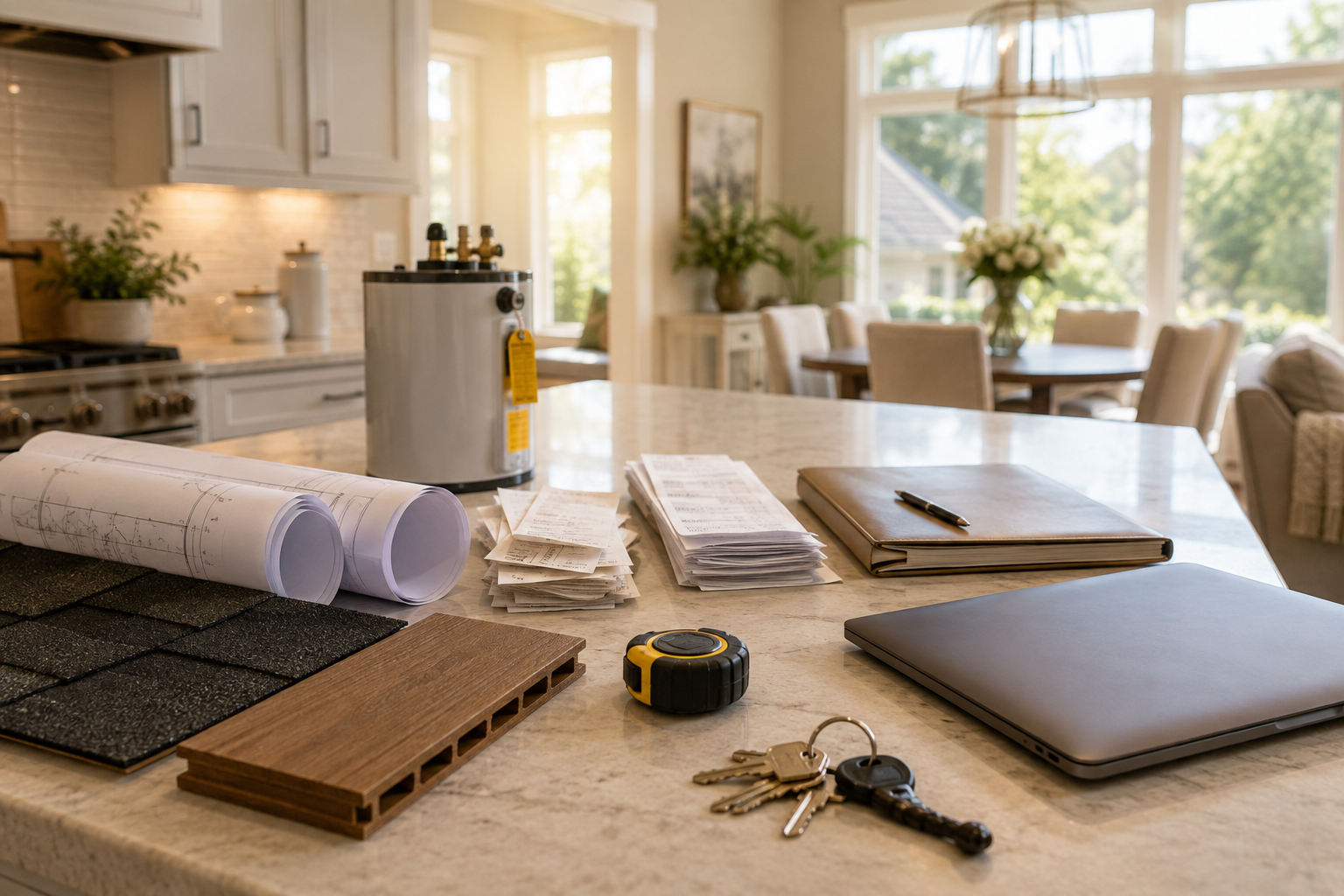
If you are getting ready to sell in Cherokee County or Cobb County, one of the smartest pre-listing steps is not cosmetic. It is checking whether your major home updates leave a clean paper trail.
The short version: before your home goes live, pull the permit history you can access, match it against the work you have done, and gather anything that helps explain the story of the property. Buyers, inspectors, and appraisers notice the difference between a home that simply looks updated and a home whose updates are easier to document.
If you want help deciding what to fix, what to document, or how to position your home for a smoother sale in Cherokee, Cobb, or North Georgia, reach out to Carol here.
Why permit records matter before listing
Permit history does not replace good disclosures or a strong listing strategy, but it can reduce avoidable friction once a buyer starts asking questions.
- It helps you spot gaps early. If a deck, basement finish, water heater relocation, or room addition was completed years ago, now is the time to see what records exist before a buyer discovers the mismatch later.
- It helps your agent price and market the home more accurately. Documented updates are easier to explain than vague improvements with unknown timing.
- It helps you gather the right contractor paperwork. Even when a permit record is limited, receipts, scope-of-work notes, warranties, and final inspection documentation can still help tell a clearer story.
This is especially useful for sellers who have owned a home for years, inherited a property, or completed work in stages over time.
What Cherokee County and Cobb County officially point homeowners toward
Cherokee County’s residential permitting guidance says permits are required for additions, renovation work, and basement finishes in the county’s permitting area. The county also lists examples of work that usually does not need a permit there, including painting, tiling, carpeting, cabinets, countertops, small sheds under 200 square feet, some fences, and some shorter retaining walls.
Cherokee also provides a permit-search path through its online portal, where users can search existing permits by application number, address, or parcel number. The county notes that if you are unsure whether a permit is required, checking with the Development Service Center first can help you avoid penalties tied to unpermitted work.
Cobb County’s residential permitting page likewise points homeowners to permit categories such as home additions, basement finish, home renovations, retaining walls, pools, and homeowner permits. Cobb also highlights a jurisdiction check, which matters because some addresses inside Cobb County are served by city permitting offices rather than the county’s unincorporated permitting system.
Cobb’s online Citizen Access system allows record searches for building permits, and its residential permitting page specifically references records such as certificates of occupancy or letters of completion. That is a useful clue for sellers: if a project was permitted, look not only for the permit itself but also for evidence that the work reached the right finish line.
What to compare against your home’s actual update history
Start with the projects a buyer is most likely to ask about:
- Additions and enclosed spaces. Finished basements, bonus-room conversions, sunrooms, porches, and expanded living areas usually deserve a closer look.
- Structural exterior work. New decks, major porch changes, or roof-structure changes can raise documentation questions even if the roof covering itself is not the only issue.
- Mechanical, plumbing, and electrical changes. Water-heater moves, HVAC replacements, panel work, gas-line work, and other system updates often matter more than sellers expect.
- Yard improvements with engineering implications. Retaining walls, drainage work, or projects near easements may deserve backup documents even when the question is not purely a permit question.
You are not trying to build a courtroom file. You are trying to avoid being surprised by your own house during due diligence.
How to handle a missing or incomplete record
A missing record does not automatically mean a deal is dead. It does mean you should slow down and decide how to prepare before your listing goes live.
- Confirm the correct jurisdiction first. County records may not tell the whole story if the work was done inside a city with its own permitting office.
- Gather the paperwork you do have. Receipts, contractor invoices, warranties, inspection stickers, and before-and-after photos can still be helpful.
- Verify who performed the work. Georgia’s official license search and the state’s consumer guidance can help you check contractor licensing where applicable, while also noting that some specialty trades such as roofers may not hold the same state license category.
- Talk through the disclosure and marketing angle early. Some issues are best addressed with documentation, some with repairs, and some with clear pricing and expectation-setting.
The goal is not to promise more certainty than you have. The goal is to enter the market prepared.
A smart seller checklist for the week before photos
- Search the permit portal for your address or parcel.
- Match any major improvements to the records you find.
- Save copies of permit, inspection, or completion documents.
- Pull together receipts and warranty information for big-ticket work.
- Flag any gray-area project for a conversation with your agent before showings begin.
- Make sure your disclosure approach matches what the paper trail can actually support.
That process is not glamorous, but it can make inspection week feel much less reactive.
FAQ: permit questions sellers often run into
Do all home projects require a permit in Cherokee or Cobb County?
No. Both counties publish examples of work categories that do and do not typically require permits, and the answer can also depend on whether the property is in a county or city permitting jurisdiction.
What if I cannot find a permit for an older project?
Start by confirming the right jurisdiction, then gather any supporting contractor and completion documents you do have. A missing online record is a cue to investigate further, not a reason to guess.
Should I wait until a buyer asks about permits?
Usually no. It is better to understand the record before listing so you can decide whether the best move is documentation, repair, disclosure planning, or pricing strategy.
Related West Legacy Realty reads
- Selling a Home This Fall in Cherokee or Cobb County? Start in August
- Can You Fence or Landscape a Drainage Easement in Cherokee or Cobb County?
- Buying a Home With a Septic System in Cherokee or Cobb County? 7 Checks Before You Offer
- Buying a North Georgia Home With Well Water? 7 Checks Before You Commit
If you want a practical read on what buyers are likely to notice, what paperwork is worth gathering now, or how to plan a sale around real conditions instead of guesswork, start a conversation with Carol here.