
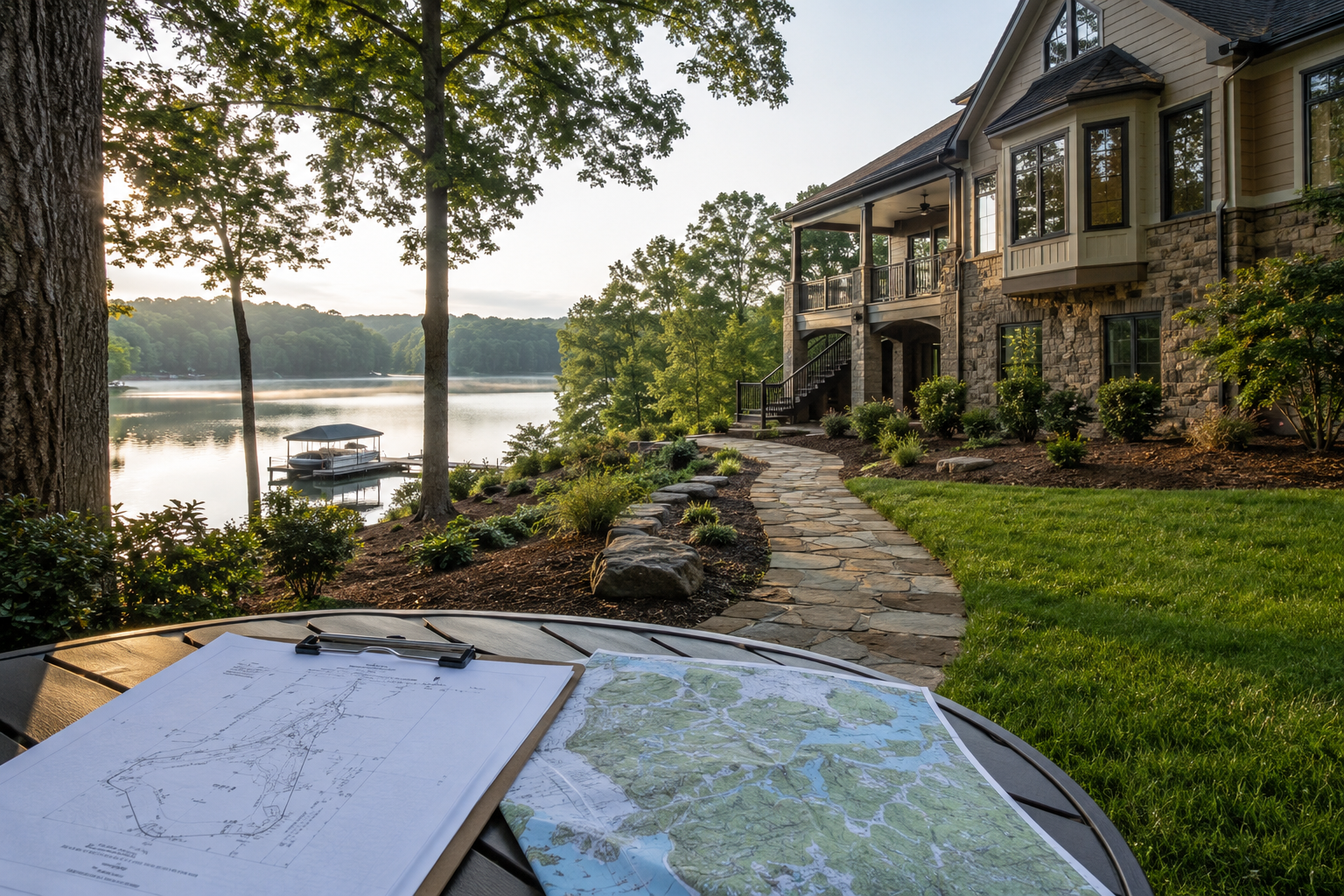
If you are buying near Lake Allatoona, do not assume the shoreline, dock, or path to the water automatically transfers with the house.
That is one of the easiest ways for a buyer to get surprised after closing. Around Allatoona, a beautiful water view and a short walk to the lake do not necessarily mean you own to the water’s edge, can keep the existing dock, or can add one later.
The practical move is to verify those details early, while you still have time to make contract decisions and request documents. If you want help sorting through lake-home due diligence in Cherokee County, Cobb County, or the broader North Georgia market, reach out to Carol here: https://westlegacyrealty.com/#consultation.
Why Lake Allatoona due diligence is different
Lake Allatoona is managed by the U.S. Army Corps of Engineers, and shoreline permits are tied to the Corps shoreline-management rules. Official Allatoona guidance says shoreline use permits, including dock permits, are only allowed in shoreline areas zoned for limited development. The Corps also makes clear that buyers should verify whether a property actually comes with a dock permit before closing.
That means a listing can offer a strong lake lifestyle without offering the exact rights a buyer may be picturing. The home may have a view, neighborhood access, or proximity to the water, but the due-diligence questions are still different from a typical suburban purchase in Cherokee or Cobb County.
1. Ask for the dock permit paperwork, not just a verbal answer
If a property has a dock, ask for the permit number and any current permit paperwork as early as possible. The Corps says buyers should verify that the property they are purchasing comes with a dock permit, and its public Allatoona resources also note that permit holders renew on a five-year cycle.
A seller or listing description may say a dock is “included,” but the better question is whether the permit is current, whether the structure matches the permit history, and whether there are any pending issues tied to that dock.
2. Confirm whether the permit can transfer after closing
Even when a dock exists, do not assume the paperwork handles itself. The Corps has a specific change-of-ownership process for Allatoona shoreline permits. Its published FAQ says a new or newly transferred permit holder currently pays $400 for the first five years, and later renewals drop to $175 every five years, plus any approved add-on land-use items.
That does not mean every property will present a problem. It does mean the transfer should be treated as a real due-diligence item, not a casual post-closing errand.
3. Check the shoreline zoning map before you count on future changes
Buyers sometimes focus only on the existing setup. A better approach is to ask what the property allows next. The Corps shoreline maps identify limited-development areas, and official Allatoona guidance says that is the only shoreline zone where shoreline use permits are allowed.
So if you are thinking about adding a dock, changing shoreline access, or making another shoreline-related improvement later, verify the zoning allocation first. A home can be close to the lake and still not support the future use a buyer had in mind.
4. Understand where the Corps boundary line actually is
This is a big one. The land beside the lake may include Corps-managed property between the house lot and the water. On the Allatoona boundary-line guidance, the Corps explains that boundary monuments mark the actual line, while painted witness trees help locate it but usually do not show the precise line themselves.
For a buyer, that means a mowed path, patio furniture near the shoreline, or long-standing personal-use patterns do not automatically prove ownership or permission. Ask for surveys, plats, and any available boundary context instead of relying on appearance alone.
5. Watch for encroachments that could become your problem later
The Corps also treats unauthorized alterations or personal property placed on public land as encroachments. Even small items can matter if they sit in the wrong place or if shoreline work happened without approval.
Before closing, look for signs that improvements near the shoreline may have been added informally. Steps, cleared vegetation, retaining work, storage areas, or expanded gathering spots near the water are worth a closer look. You do not want to inherit a cleanup issue you did not create.
6. Run the flood-map check early, especially if the home sits low or close to a cove
Waterfront appeal and flood-risk review are not the same conversation. Cobb County points property owners to its FEMA floodplain search tool, and Cherokee County directs residents to FEMA’s official Map Service Center for current flood-map review.
Use those tools early in the process. If the home, driveway, septic area, or intended addition area sits in or near mapped flood risk, that can affect insurance, lender requirements, project planning, and your comfort with the property long term. If the lot also includes a creek corridor or stormwater path away from the shoreline, this related West Legacy guide can help you think through those yard constraints too: Can You Fence or Landscape a Drainage Easement in Cherokee or Cobb County? What Homeowners Should Check First.
7. Separate lifestyle assumptions from property rights
Some buyers are really shopping for a view. Others want a legal dock setup, a smoother shoreline path, room for water toys, or a future improvement plan. Those are different goals, and mixing them together is where mistakes happen.
The cleanest path is to decide what matters most before you get emotionally attached. If direct shoreline access is essential, say that early. If you are open to a nearby-lake lifestyle without full dock expectations, that is a different search strategy and often opens more options.
What to ask before you move forward
- Do we have the current dock permit number and transfer details?
- Is the shoreline in a limited-development area or another zoning allocation?
- Do surveys or plats clarify the lot line versus the Corps boundary line?
- Are there visible shoreline improvements that need permit confirmation?
- Have we checked the FEMA and county flood-map tools for this address?
- Does this property match the kind of lake use you actually want?
Lake homes can be worth the extra homework
Buying near Lake Allatoona can be a great move for the right buyer. The key is making sure the property matches the version of lake living you think you are buying.
If you want a second set of eyes on a Lake Allatoona property, or you are weighing options in Cherokee County, Cobb County, or North Georgia, Carol can help you sort through the trade-offs before you commit. Start the conversation here: https://westlegacyrealty.com/#consultation.
Related reading
If this home also comes with acreage-style systems or lot constraints, these West Legacy posts are worth reading too: Buying a Home With a Septic System in Cherokee or Cobb County? 7 Checks Before You Offer, Buying a North Georgia Home With Well Water? 7 Checks Before You Commit, and Buying a Home on a Private or Shared Driveway in North Georgia? 8 Checks Before You Offer.
FAQ
Does a Lake Allatoona dock automatically transfer with the house?
Not automatically. Buyers should verify the current permit status and the Corps change-of-ownership process before closing.
Can every house near Lake Allatoona get a dock permit?
No. Official Allatoona shoreline guidance says shoreline use permits are allowed only in areas zoned for limited development.
How do I check flood risk for a home near Lake Allatoona?
Start with FEMA’s Map Service Center, then use the county floodplain tools for Cobb County or Cherokee County when the property falls in those jurisdictions.