
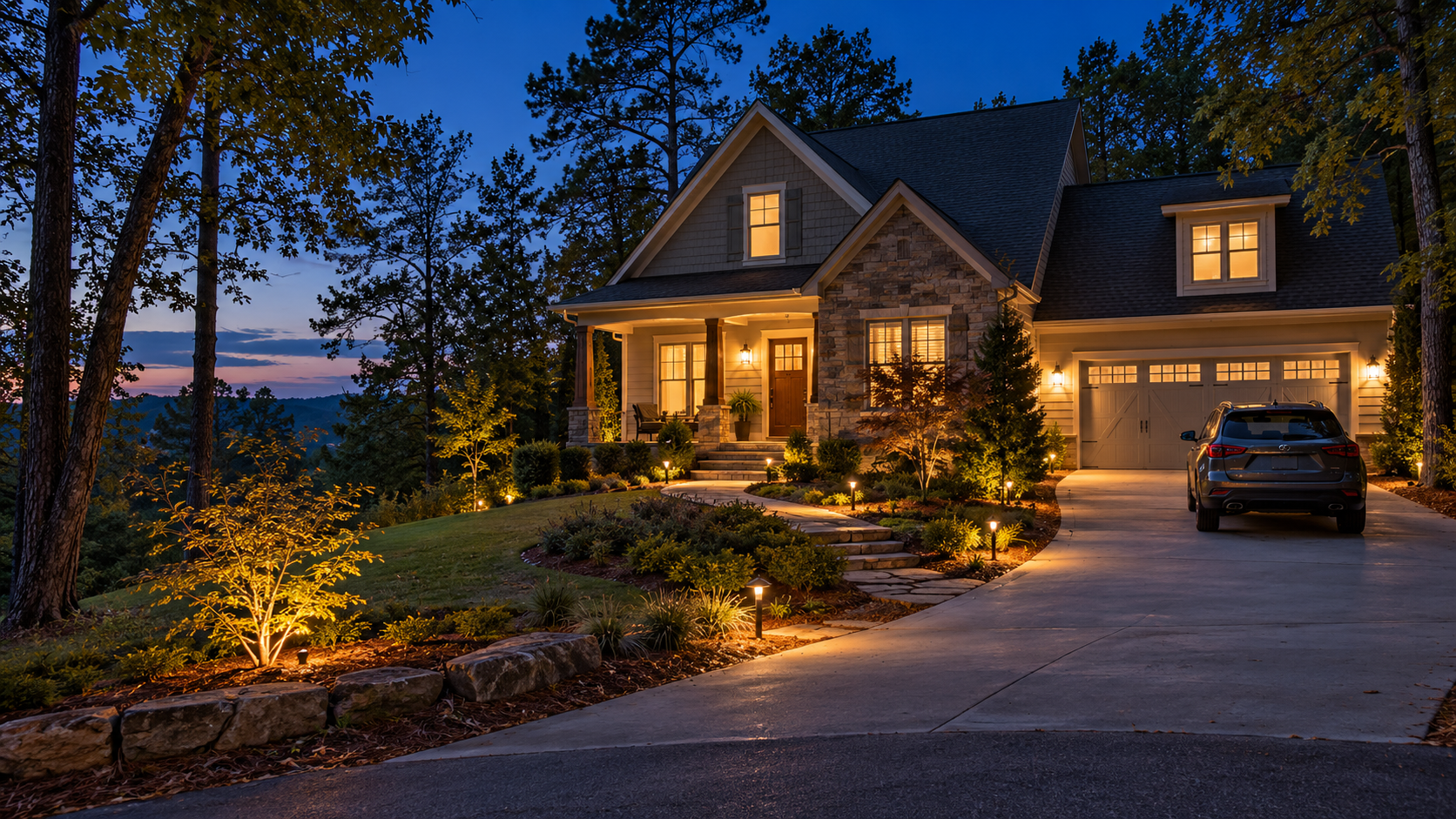
Yes, it is worth touring a home after dark when your schedule and the seller’s access allow it. An evening second look can show you how the driveway, steps, exterior lights, interior rooms, window reflections, nearby roads, and normal routines feel when daylight is no longer doing the work. It should complement a daytime visit and a professional inspection, not replace either one.
That distinction matters in Cherokee County and Cobb County, where two homes with similar mailing addresses can have very different approaches, lot grades, road conditions, lighting arrangements, and surroundings. Use the evening visit to collect objective information about the property and your own daily needs, not to make assumptions about a community or the people who live there.
What an evening home tour can reveal
A daytime showing is usually best for studying the roofline, drainage, trees, exterior surfaces, grading, and natural light. After dark, different details become easier to notice: whether you can see the driveway entrance, how shadows fall on steps, which rooms feel dim, what reflects in the windows, and how the route works at the hour you may actually travel it.
Ask your agent to coordinate access rather than returning to the property unannounced. If the home is occupied, respect the approved showing window and the seller’s privacy. Bring the listing information, a small flashlight, and the same checklist you used during the day.
1. Drive the route you would normally use
Approach the home from a route that matters to your household. Look for lane markings, turn visibility, curves, hills, railroad crossings, intersection lighting, and how clearly you can identify the driveway or subdivision entrance. Then try the route in the opposite direction if that is part of your normal travel pattern.
Do not assume every road is maintained by the same agency. Cherokee County Public Works notes that state routes and highways are not maintained with county resources, while county public works responsibilities include roadway maintenance, drainage, and pavement work on the county system. For a specific address, confirm the responsible road authority rather than inferring it from a postal city.
If commute timing, school-day traffic, or errands will shape the move, pair this visit with our guide to testing your daily routine before buying in Cherokee or Cobb.
2. Test the driveway and parking approach
Pause before pulling in. Can you identify the entrance early enough to turn comfortably? Note the driveway width, grade, curves, drop-offs, shared sections, gate position, drainage features, and available turnaround space. If the home sits above or below the road, check whether headlights illuminate the path or shine directly into living spaces.
Park where you would normally park and walk the route from the vehicle to the most likely entrance. A garage may be convenient, but also test the path a guest, delivery driver, or household member would use when the garage is unavailable.
3. Walk the steps, paths, and thresholds
Look for changes in elevation, uneven paving, loose gravel, low branches, handrails, and the edge between a walkway and planted areas. Turn the installed exterior lights on and off when the showing permits. A light fixture can be present without illuminating the step, landing, lock, or house number where you need it.
Use a flashlight for observation, but do not let it hide what the home’s normal lighting actually provides. Record any dark areas that may warrant a closer daytime review or a conversation with a qualified contractor. If mature trees shape the approach, our North Georgia mature-tree checklist covers roots, branches, clearance, boundaries, and specialist questions to revisit in daylight.
4. Evaluate exterior lighting without assuming it can simply be changed
Check the porch, driveway, garage, side yards, deck, patio, and service areas. Notice whether fixtures are working, whether motion sensors respond as expected, and whether glare makes it harder to see beyond the brightest spot.
Lighting rules can depend on jurisdiction, property type, and project scope. Cherokee County’s outdoor lighting and road-glare ordinance, for example, addresses shielding, glare, light trespass, roadway lighting, and certain subdivision street-light requests. Before planning new poles, powerful fixtures, or other exterior work, confirm the parcel’s jurisdiction, HOA requirements, permits, and current rules.
If you are unsure whether county or municipal requirements apply, start with our guide to verifying city limits for a Cherokee or Cobb home.
5. Turn on the interior lights room by room
Test the installed fixtures and switches in a consistent sequence. Look at kitchens, stairs, halls, closets, bathrooms, laundry spaces, garages, basements, and rooms without much natural light. Note fixtures that flicker, switches that seem unclear, or areas where portable lamps are doing most of the work.
An evening showing is not an electrical inspection. Do not remove covers, open panels, or test equipment beyond the showing permissions and your competence. Ask a qualified inspector or electrician about concerns. The Georgia Attorney General’s Consumer Protection Division recommends using a home inspection to identify potential problems and provides guidance for choosing an inspector.
6. Check windows, reflections, and privacy for your own use
Stand in the main rooms with the lights on and curtains or blinds positioned as they were during the showing. At night, windows that offered a broad daytime view may act like mirrors, and lit interiors may be visible from outside. Check this from lawful, approved areas of the property rather than neighboring land.
Focus on the physical layout: window placement, existing coverings, sightlines from the driveway or street, and whether exterior lighting creates glare on the glass. Your preferred balance of openness, lighting, and privacy is personal; record what changes you would consider and verify any HOA or architectural rules before assuming they are allowed.
7. Listen for normal activity, not a single moment
Spend a few quiet minutes in the yard and in the rooms where you expect to sleep, work, or relax. Listen for road traffic, aircraft, trains, recreation areas, mechanical equipment, pets, or commercial activity. One visit is only a snapshot, so avoid treating a quiet or busy moment as a guarantee.
Return at another relevant time when practical, review objective maps and public information, and ask direct property-specific questions. Keep the evaluation tied to observable conditions and your needs rather than assumptions about neighbors or neighborhood demographics.
8. Flag drainage and landscape questions for daylight
Darkness can reveal reflections from standing water or poorly lit grade changes, but it can also conceal drainage channels, erosion, retaining-wall movement, roof wear, and tree defects. If you notice damp areas, ponding, a steep slope, or water moving across a hard surface, photograph or note the location and return in daylight.
Ask about drainage history, maintenance responsibilities, and prior work. Then use the appropriate professionals for inspection, surveying, engineering, arborist, septic, or other specialized questions. An evening impression should create follow-up items, not a conclusion about conditions you cannot see clearly.
9. Repeat the arrival and departure before deciding
Leave the property, make the likely turn back onto the road, and notice whether the exit sightline differs from the entrance. If the home has multiple parking spaces, confirm that normal vehicle placement does not block the turnaround or visibility. Also note whether navigation apps identify the correct entrance; rural, corner, shared-driveway, and new-construction addresses can sometimes route visitors differently.
Before your due-diligence deadline, compare notes from the daytime and evening visits. Separate issues into three groups: acceptable as-is, questions needing verification, and changes that require cost or approval research. That makes the second visit useful without letting a single atmospheric impression drive the decision.
A concise after-dark home tour checklist
- Drive the normal route in both relevant directions.
- Identify the driveway entrance with ordinary lighting.
- Test parking, turnaround space, and the walk to the door.
- Check steps, handrails, thresholds, paths, and grade changes.
- Operate permitted exterior and interior lights.
- Observe window reflections, sightlines, and glare.
- Listen from the yard and the rooms that matter most.
- Flag drainage, trees, slopes, and exterior conditions for daylight.
- Verify jurisdiction, road authority, HOA rules, and specialist needs.
Frequently asked questions
Should the first home tour happen after dark?
Usually, a daylight first visit is more useful because it lets you see the exterior, lot, roofline, drainage, trees, and natural light. Use an evening visit as a focused second look when possible.
Can a buyer visit a listed home without an appointment?
No. Coordinate access through the appropriate real estate professionals and follow the approved showing instructions. Do not enter the property, driveway, or yard without permission.
Does a dark street mean streetlights can be added?
Not necessarily. Street-light installation, cost, petitions, utility involvement, road ownership, HOA requirements, and local rules vary by address and jurisdiction. Confirm the current process with the responsible government, utility, and association before relying on a future change.
Does an evening visit replace a home inspection?
No. It is a practical observation visit, not a technical inspection. A qualified inspector and, when needed, specialized professionals can evaluate systems and conditions beyond what a showing reveals.
Plan a second look with a local guide
A useful home search includes more than a polished first impression. Carol can help you coordinate a property-specific second visit, organize questions for the seller and local authorities, and keep follow-up items aligned with your contract deadlines. Schedule a West Legacy Realty consultation to talk through your Cherokee County, Cobb County, or North Georgia home search.
This article provides general real estate information, not legal, engineering, electrical, inspection, or safety advice. Property access, road authority, lighting rules, HOA requirements, and physical conditions vary by address and can change. Verify material questions with the appropriate government offices and qualified professionals.